New High Cholesterol Advice:
Surprise Foods That Fight High Cholesterol

Best high cholesterol advice?
Perhaps your doctor has told you about foods that fight high cholesterol?
- Did your doctor tell you there is one single snack that can lower your cholesterol by 23 per cent?
If not, here are some surprises. This high cholesterol advice is not about some exotic new super food from the jungle!
High Cholesterol Advice: an Apple a Day???
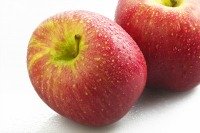
Researchers were shocked to find that by snacking on apples for 6 months, people lowered their cholesterol on average by 23%.
When snacking on apples, people's “bad” LDL cholesterol dropped by 23% while their “good” cholesterol, which helps remove fatty deposits from blood vessels, increased by 4%.
A pleasant surprise, according to Dr. Bahram Arjmandi, because “I never expected apple consumption to reduce bad cholesterol to this extent.”
This was an accidental finding, because Dr. Arjmandi had given a group of women a snack of 75 grams (2.6 oz) of dried apple per day. This snack was for a “control group” in a study on the effect of eating prunes for bone density.
- He explains that he knows of no other single food that can lower LDL by such a large amount!
Dried apples were used to ensure that everyone ate exactly the same amount, but fresh apples are even better.
Dr. Arjamandi speculates that it was the apple pectin, a soluble fiber, that also caused weight loss of 3.3 lbs, or 1.49 kilograms per person, on average. 1

High Cholesterol Advice: Healthy Recipe
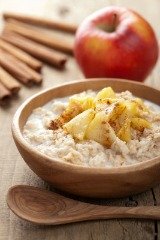
If you want to try lowering cholesterol naturally, eating an apple or two per day would be the equivalent of the dried fruit used in the study.
Want a RECIPE for lowering cholesterol naturally?
- Add a GRATED APPLE to your OATMEAL in the morning, or look up a recipe for MEUSLI, and you are on your way to lowering your cholesterol naturally with FOOD rather than medicine!
High Cholesterol Advice for after a Stroke?
After a stroke high cholesterol advice would still be for an apple a day...
But in this case, add spinach and blueberries!
Researchers were amazed at the extent of neuro protection that antioxidant-rich diets provide.
Dr. Paula Bickford, a researcher at the USF Center for Aging and Brain Repair reported that the size of the stroke was 50 to 75 percent less in rats treated with diets supplemented with blueberries, spinach or spirulina before the stroke.
- The antioxidants and anti-inflammatory substances in these fruits and vegetables reduce the nerve cell injury and death triggered by a stroke, say these researchers.
- They conclude that ongoing treatment with blueberry, spinach, or spirulina reduces cell death (ischemia/reperfusion-induced apoptosis) and cell death due to stroke. (cerebral infarction).
This is an easy, readily available, inexpensive and safe way to benefit stroke patients, and can help you avoid dangerous blood thinner medication.
High Cholesterol Advice AFTER a Heart Attack?
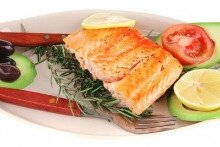
Best high cholesteroll advice for after a heart attack?
Still, an apple a day...but also:
Eating fish and taking omega oils and fish oil supplements is one of the best things to do:
- After a heart attack, best to focus on diet and supplements to keep yourself healthy to reduce your need for medications.
Fish oil, a food cure for your heart, is a good place to begin.
Filled with omega-3 fatty acids, any doctor's high cholesterol advice would be to start eating fish multiple times a week and consider supplements. Which is best?
- Fish oil has many benefits for people who have had a heart attack.
A big trial testing fish oil for people who had had a heart attacks studied over 2,000 men, and divided them into three groups:
1. The first group followed the American Heart Association and increased polyunsaturated to saturated fat while decreasing saturated fats.
2. The second ate more fish especially fatty fish two to three times per week, or took fish oil capsules a day. (450 mg omega-3)
3. The third group increased cereal fiber intake at least 18 grams per day.
The first group reducing fat intake did not have any difference in death rates, as changing types of fat only gave a small decrease in their levels of cholesterol.
- People who ate more fatty fish and got from 500 to 800 mg a day of omega 3 fatty acids had a big reduction in all-cause death rates, as compared with those who did not. (29%)
- Those who took fish oil capsules (450 mg EPA and DHA per day) instead of eating fatty fish had 62% less heart-related deaths and 56% reduced overall risk of death. 2
High Cholesterol Advice: Fish Oil or Vitamin E?
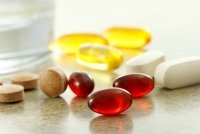
Here's studies of the effectiveness of omega-3 fatty acids, alone or in combination with vitamin E, versus vitamin E alone or placebo for those who'd had heart attacks.
For five years, over 11,000 people who had had a heart attack within the previous three months got supplements with either:
1) 1,000 mg per day of omega-3 fatty acids 2) 1,000 mg of omega-3 fatty acids and 300 mg of vitamin E per day or 3) 300 mg/day of vitamin E or 4) or placebo.
These were mainly men (85% and the mean age was 59.4 years, with 16% aged 70 years or over. All groups were asked to eat a Mediterranean diet.
The results:
- People taking fish oil capsules, but not vitamin E, had a less risk of death by heart attack and stroke by 15%, and a 45% reduction in the risk of sudden death.
- The effect of fish oil in reducing the risk of sudden death was noticed after four months of taking the supplements.
- The effect of fish oil in reducing heart disease deaths was seen after six to eight months of treatment.
Taking one gram of fish oil with 850 mg of omega 3 daily could save five to seven out of 1,000 patients with a previous heart attack per year, say the researchers.
THESE RESULTS ARE COMPARABLE TO LOWERING SERUM CHOLESTEROL LEVELS WITH A COMMONLY PRESCRIBED DRUG FOR ONE YEAR. 3
High Cholesterol Advice: Food or Vitamin Pills?
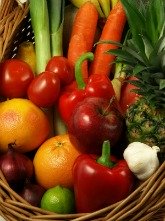
Healthy food gives better protection, say researchers, but taking vitamin supplements is still a good idea.
- What about the confusing reports in the media vitamin E?
Doctors and scientists have since the 1920's reported the benefits of vitamin E, showing fewer miscarriages in pregnant women, and dramatic improvements in heart function and blood flow. (Drs. Evan Shute, obstetrician and William Shute, cardiologist)
There is a volume of research that shows that antioxidants protect not only against heart disease and cancers and stroke, but also against the aging process including eye problems like Macular Degeneration.
- But, while supplementing is recommended, more's not always better -- anti oxidants can sometimes act as pro-oxidants, say scientists.
Scientists are still writing the book on the benefits of food versus isolated antioxidants in vitamin supplements.
- Researchers continue to discover how antioxidants protect and are finding that balance is essential, which is difficult to get by taking a hand full of pills!
Simple healthy foods and "super foods" are still your best bet.
High Cholesterol Advice: Vitamin Supplements Yes or No?
MANY studies have without a doubt, shown the benefits of taking supplements.
For instance, in the Framington study of nurses, those taking folic acid and vitamin B supplements had less heart disease, along with those who had a higher than average dietary intake of folate and vitamin B6.
These results were published in the JAMA:
"Intake of folate and vitamin B6 ABOVE the current recommended dietary allowance may be important in the PRIMARY PREVENTION of heart disease."
- Make sure you have a GOOD multiple vitamin/mineral as "insurance" has definitely been shown to be preventive, as is taking extra calcium and Vitamin D3.
High Cholesterol Advice: How Much?
How much to eat of fruits and veg and vitamins?
A recent study by the American Institute for Cancer Research determined that vegetables and fruits are preferable to supplements for harnessing antioxidant power.
Researchers tested two groups of people, and measured them for oxidation damage, antioxidant nutrients and defense systems after 25 days.
Everyone ate the same basic diet, but the one got about six servings of fruits and vegetables a day, while the other got a vitamin and mineral supplement.
- The group that ate vegetables and fruits showed significantly less oxidation damage than the others, and only that group showed an increased level of an enzyme system that is vital for antioxidant defense.
- The group that took supplements also showed a reduction in oxidation damage, but not as much.
- And, when the amount of fruits and vegetables was doubled, from five fruits and vegetables a day to ten servings a day, the results were even more pronounced, so that participants' antioxidant intake and capacity measured by blood tests, increased substantially.
Other research shows that this increased effect levels off at about ten to twelve fruit and vegetable servings a day. After that, adding more does not really seem to matter.
Biggest Bang for the Bite!
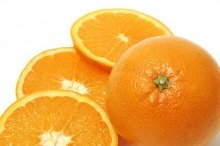
Buying organic products may be your best bet yet!
Why? Slowly but surely, the evidence is mounting.
For instance, The European Journal of Nutrition recently reported findings showing that organic red oranges have:
1. a higher phytochemical content (i. e., phenolics, anthocyanins and ascorbic acid),
2. a higher total antioxidant activity, AND
3. higher bioactivity, than nonorganic red oranges.
These researchers concluded that organic red oranges have a higher protective effect against oxidative damage at the cellular level, than do nonorganic red oranges.
SOURCES for high cholesterol advice:
1. Florida State University study presented at the Experimental Biology Annual meeting in Washington DC, 2011.
2. Burr, M.I., et al., "Effects of changes in fat, fish, and fibre intakes on death and myocardial reinfarction: diet and reinfarction trial (DART)," Lancet, 1989; 2: 757-61.
3. Kromhout, D., et al. New Engl. J. Med., Aug. 29, 2010.
GO to Health Discoveries HOME PAGE from high cholesterol advice


Recent Articles


-
Natural Blood Pressure Supplement Backed by Science
Apr 13, 24 04:10 PM
Try a natural blood pressure supplement for lowering blood pressure without life long medications. -
Scientists find a Natural Treatment for Parkinsons Disease
Apr 04, 22 10:18 PM
A new treatment for Parkinsons disease? Parkinson's disease is a neuro-degenerative disorder for which no neuro-restorative therapeutic treatment is currently available. The medications typically used… -
Amazon’s Best Beauty Products?
Mar 25, 22 12:00 AM
Finding which beauty product is best for your health has just become easier. Did you know that in 2022 Amazon created the Amazon AWARE line of beauty products that are EWG VERIFIED? This stamp of appr…