Obesity: Do Overweight People
Really Gain Weight More Easily?
Are you are struggling with obesity or overweight?
Do you feel that the deck is stacked against you?
If you think that you gain weight more easily than others do, you are likely right!
- It could be that the odds are against you, so please read on so you can find your best weigh loss program and get the best weight loss plans to succeed. So what's the bad news?
New research shows different stomach microbes in the guts of people who are lean compared to those who are obese.
According to a study that appeared in NATURE, the weekly British science journal, having certain types of gut bacteria can encourage obesity.
- “It is as if one group gets more calories from the same bowl of cheerios,” says Dr. Jeffrey Gordon, a Washington University researcher.
Dr. Gordon led a team that found more of a certain type of bacteria, (Bacteroidetes) in the gut of lean people than of those who are very overweight, or obese.
Obese people had more microbes called Firmicutes. than did lean people.
- Here's why these "bugs" are important -- because they are either working FOR or AGAINST you:
Researchers found the microbes in obese people to be better at gleaning calories from food than those bacteria usually found in lean people.
BUT IT GETS WORSE:
- When testing this theory out on mice, researchers found that obese mice not only had fewer Bacteroidetes than their skinny counterparts, but they were also rich in genes that broke down hard-to-digest foods more efficiently!
Also, when researchers transplanted the microbes from obese mice into lean mice, they got “twice as fat” and took in more calories from the same amount of food than did mice who had a normal bacteria ratio.
- Before you get too discouraged though, researchers also found that you can regain the proper ratio of bacteria in the gut by dieting.
Through dieting you can change these "bugs" so that the "bad" bacteria or Firmicutes that are very efficient at extracting calories, decrease!
New Approaches For Obesity Treatment
There is a new field of “INFECT- OBESITY” that looks at multiple causes, including viruses and microbes.

- Within a decade or so, the different causes of this condition will likely have new treatments, according to Dr. N. Dhurandhar, a professor at Pennington Biomedical Research Center in Baton Rouge.
Other researchers, like Dr. Robert Dent, are examining genetic factors for obesity.
Dr. Dent, the head of a weight management clinic, is matching different types of overweight with 600 different types of genes at the University of Ottawa Heart Institute. He is studying 1000 very overweight, and comparing them with 1000 patients who are underweight, and is finding great variation.
- Surprisingly, about half of the thin people eat as much or more than the overweight patients do, according to Dr. Dent, and there is even the odd person who will not lose weight on 500 calories a day. This research is ongoing.
Other research with animals and human beings also suggests that BODY-MASS INDEX (BMI) MAY BE INHERITED.
- There is some evidence that men and women with a genetic predisposition toward greater fatty tissue are having bigger families.
The higher the parents’ body-mass index, the greater the number of kids they have. If men and women with a larger BMI are more likely to reproduce, it will result in more children with genes that predispose them to be overweight.

Good News? Losing Weight Changes
Weight-Gaining Bacteria!
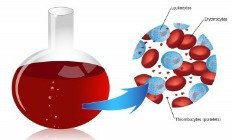
The good news is, that the proper ratio of "good bacteria" in the gut can be changed by dieting so that the bacteria or Firmicutes that make the gut more efficient at extracting calories, decrease.
In a study of a dozen dieting people, the results were dramatic.
- Before dieting, about 3 per cent of the gut bacteria in the overweight participants were Bacteriodetes.
But after dieting, the now normal-sized people had much higher levels of these "Bacteriodetes" microbes – about 15 per cent.
Overcoming Emotional Eating
If you know that you are eating to help you to "feel good" when you are stressed, upset or face emotional challenges, here is a device that can really help you change your habits.
- Researchers at the HeartMath Institute have created a device that can signal you when you are becoming stressed and in the "danger zone" and help you make better choices.
Why not find out how these leaders in stress management can help you retrain to get onto a better path.
---------------------------------------
Here's HELP for leaving stress eating behind:
---------------------------------------
Obese People Don't See Themselves That Way
Obese people are accurate in assessing their height and weight, but only 15 percent think of themselves as obese, according to a study at the University of North Carolina at Chapel Hill.
"I think a lot of people, when they think about obesity, think of someone that is 400 pounds or so," according to the study's lead author, Dr. K. P. Truesdale.
However, if a woman is 5 feet 4 inches tall and weighs 175 pounds, she would be classified as obese.
Families often deny the fact of obesity, and don't face the fact that their cute chubby kids are obese. So support your kids by:
Discrimination and Getting Help
Researchers such as Dr. Dent have found the attitudes in the medical community to be similar to those of the public. In spite of new research, prejudice still considers very overweight people to eat too much and to be lazy.
It is not news that there is a widespread cultural prejudice against being overweight.
Unfortunately, professionals and health professionals are not exempt. This discrimination may be subtle, or not.
The problem is so ingrained in the medical profession that even those doctors who specialize in overweight, dislike their clients, according to a 2003 Yale University study that questioned 329 members of the North American Association for the Study of Obesity.
- Even these specialists were found to have an anti-fat and pro-thin bias based on an association test given them.
The study concluded that “the stigma is so strong that even those most knowledgeable, think that obese people have blameworthy behavioral characteristics that contribute to their problem,” even extending to core characteristics of intelligence and personal worth.
And eating disorder statistician at the University of British Columbia, C. Laird even suggests that “Obese people hate other obese people.”
Getting Over the Obstacles
People do overcome obstacles to losing weight, including genetics and discouragement, and it could mean dealing with:
- Stress, poor nutrition or dietary deficiencies, thyroid deficiency, insulin sensitivity, insomnia (sleep deprivation), effects of medications, genetics, hormones, (especially the stress hormone cortisol), addictions, or disease.
You may want to stop counting calories and start losing weight! Here's resources to find the best weight loss plan for you:
Hypothyroidism Epidemic
Australians go LOW fat & still get FATTER
Low fat is NOT the answer, as the Australians found out.
By the year 2000, two decades into the mainstream low-fat campaign, Australians had a serious weight problem. Obesity rates in men had doubled since 1980 and tripled in women, with 67 per cent of men and 52 per cent of women overweight.
- This ranked Australians just one percentage point behind the world's beefiest nation, the United States.
Paradoxically, throughout these 20 years of unprecedented weight gain, dietary fat intake remained relatively modest: 1995 figures attributed only 18 to 19 per cent of the average Australian's calories to fat – not enough for most dieticians to explain the increasingly chubby population.
- This contradiction of overweight, diabetes, and high cholesterol rates even with lower fat intake caused many researchers to rethink whether fats were really the main problem.
Because of this contradiction, trans fats have been singled out as a health hazard, although companies have been slow at eliminating them.
Classic Oreo cookies were at the top of the list for containing trans fats, but the Oreo company now has trans-fat free snacks on the market.
- Best to keep it simple and stick to the healthy fats in avocados, nuts, fish and olive oil for health!
Don't be Fooled by DIET SODA, drink Water!
“INVISIBLE” LIQUID CALORIES in beverages, say researchers, play a big role in weight gain because people don’t realize the calories that are in these drinks.
They also leave people hungrier than food does, for the calories consumed.
By 2001, soda, juice, milk, beer and other beverages accounted for 21 per cent of the calories consumed in the US, which was a 16 per cent increase over 20 years, according to Barry Popkin, a researcher at the University of North Carolina at Chapel Hill.
- Why not ARTIFICIAL SWEETENERS for obesity? Although everyone eats artificial sweeteners to lose weight, the research shows that they increase insulin, increase the appetite and therefore cause people to GAIN weight.
- See Sweet Deception
Best Weight Loss Plans & Help
Your best weight loss program will have good, wholesome, home made meals and snacks, so go out less and get creative with making foods you love.
- And science has shown what's best to help kick-start losing weight:
Proven ingredients best combination:
GO TO Health Discoveries HOME PAGE from Obesity Best Weight Loss Plans


Recent Articles


-
Natural Blood Pressure Supplement Backed by Science
Apr 13, 24 04:10 PM
Try a natural blood pressure supplement for lowering blood pressure without life long medications. -
Scientists find a Natural Treatment for Parkinsons Disease
Apr 04, 22 10:18 PM
A new treatment for Parkinsons disease? Parkinson's disease is a neuro-degenerative disorder for which no neuro-restorative therapeutic treatment is currently available. The medications typically used… -
Amazon’s Best Beauty Products?
Mar 25, 22 12:00 AM
Finding which beauty product is best for your health has just become easier. Did you know that in 2022 Amazon created the Amazon AWARE line of beauty products that are EWG VERIFIED? This stamp of appr…