Getting Kids Eating Healthy: 10 Tips &
Secrets for Healthy Kids Snacks and Meals
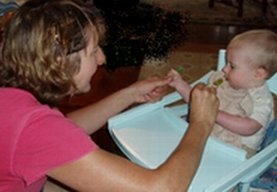
Getting kids eating healthy means planning healthy meal ideas for kids. And having lots of healthy snack recipes for kids too. Why?
- Because your kids are surrounded by a “convenience culture” of sugary, salty and fatty foods with not enough fruits, vegetables or dairy products.
- Research shows that by age two, children have developed food preferences that will follow them for life.
What's the problem?
- Time Magazine reported a survey that one in five babies and toddlers aged two or younger eat sweets every day, and that the VEGETABLE they eat MOST is FRIES!
So if you want your kids eating healthy, you have to "buck the trend!"
- To help you, we've posted tips for healthy snack recipes for kids and some healthy meal ideas:
The Secret to Your Kids Eating Healthy?

Here's secret #1 for healthy kids:
Kids likes and dislikes are guided by their mothers' - if you don't like a vegetable, and don't give it to your kids, they won't learn to like it!
- Eight year olds usually like the same foods they did when they were four. (An infants and toddlers study that tracked 3,000 kids)
The news is not good, if you have not started early with healthy recipes for kids. Here's the bad news from researchers, who find that:
- Children will suffer irreversible damage into their adult life
without healthy eating.
With fast foods, they will likely have deficiencies in vitamin A, folic acid and zinc - found in veggies, and these deficiencies are the biggest contributors to childhood diseases, according to a prestigeous medical journal, The Lancet .
SECRET # 2 for healthy kids:
Stop giving kids "kid food" instead of the healthier meal that you hopefully are eating yourself.
- Hopefully you are eating a healthier meal yourself, instead of: pizza, fries, chicken nuggets, macaroni and cheese that are no better for them, than they are for you.
What's the Secret to Healthy Kids - Your 10 Year Old Eating Healthy?
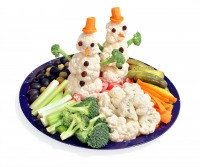
Here's the bad news about 10 to 12 year olds:
- When researchers asked 534 kids ages 10 to 12 what they eat in their bedrooms, they were astounded to find that 58% of boys eat regularly or daily in their bedrooms, and they typically eat: pastries, ice cream, French fries and sodas.
The girls fared slightly better, preferring fruit juices, tea or coffee. (M. Marquis, University of Montreal)
What is the reason for kids eating healthy or not?
- Families tend not to sit down to eat together for their meals anymore, and this shift has been going on for a number of years, according to Laurent Legault, director of the weight-management clinic at the Montreal Children’s Hospital
What to do to avoid eating meals in your car, in bedrooms, to counteract this trend?
- You may need to spend time re-training taste buds to appreciate real and simple foods rather than those laced with fats or sugar.
Even providing a “sit down meal,” may be a novelty!
Parents and even grand parents may need to pitch in to re-assess “convenience.”
HERE ARE 10 HEALTHY EATING TIPS to get you thinking beyond carrot and celery sticks for real healthy eating:
Kids Eating Healthy Tip: Add greens to favorites

Kids prefer raw vegetables, so give them carrot sticks, raw broccoli and cucumber sticks.
For meals, you can add greens -- vegetables to favorites such as pasta or mashed potatoes.
- Make our family's kids favorite: GREEN POTATOES.
Just add finely chopped kale to the last 5 minutes of steaming potatoes and then mash into the potatoes according to your favorite method.
- Adding grated zucchini and carrots to a pasta sauce will usually fool them and add fiber, nutrition and they will eat less calories that way and get more nutrition.
- Blending broccoli and cauliflower into pasta sauce also works well -- these "disappear" just fine.
Kids Eating Healthy Tip: Quit Food Additives
It’s official, food additives make kids more hyper!
For healthy kids, eat REAL, unprocessed foods:
- A study, published in the prestigious medical journal The Lancet showed that artificial colors and flavors are definitely affecting children's behavior.
Researchers tested a cocktail of artificial colors and the commonly-used preservative sodium benzoate on three year olds and older children, and found that these clearly increased the hyperactivity of these kids.
Food additives, they found, increase these hyperactive behaviors:
- inattention
- impulsivity
- overactivity
Increased hyperactivity is associated with problems in school, especially reading problems.
Kids Eating Healthy Tip: Real food can be as Fast as "Fast Food" for Breakfast
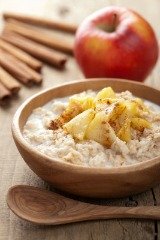
Putting on a pot of oatmeal on is easy – just bring the oats to a boil, add raisins, sunflower seeds, chia seeds, nuts, and turn it off.
Cover and let sit for 5 minutes for everyone to take as they get ready.
Why oatmeal for breakfast and not packaged cereal?
- First reason -- children who miss out on breakfast are more sluggish, less attentive and have less energy.
- Second reason -- in a study of 60 children compared what they had for breakfast with their performance at school, both boys and girls did better after eating oatmeal compared with sugary cereal.

The “slow release” of glucose of the oats boosts memory and attention, not like the “fast release” sugar cereal.
Slow-release breakfasts for healthy kids are:
- oatmeal (non-instant), bran cereal, whole-grain breads with nuts and seeds, apples, oranges, grapefruit, berries, grapes, pears, milk, yogurt and soy drinks.
Kids Eating Healthy Tip: The one-bite rule
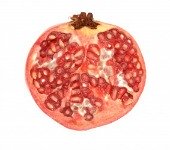
Having a rule that kids must try at least one bite of a food they don’t like or THINK they don’t like.
Researchers tell us that it often takes SEVEN TRIES for a child to get to like a vegetable. Why?
- Nature gives us a "warning" when we first try a "bitter" food like green beans and veggies that in the past might have been poisonous.
So, if your child "grimaces" at the first bite, it is not that they don't like it -- it is just nature's protective reaction, so STICK WITH IT FOR at least 7 TIMES.
- A child can imagine all kinds of things, so to keep them open minded -- a “one bite rule” will show them that they can survive an unusual taste sensation.
Many kids need to “re-train their brain” from an unvaried over-dose of fatty, starchy sweets.
People and families vary greatly as to their curiosity about foods and willingness to taste different foods.
In the past, sticking to the “tried and true” might have been for safety.
- Today, healthy eating means eating a wide variety of fruits, vegetables and whole grains!
Kids Eating Healthy Tip: Add Berries, Berries, Berries and GREENS
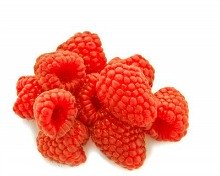
Make a sweet COLESLAW by chopping part of a cabbage and some carrots VERY fine and adding dried CRANBERRIES, BLUEBERRIES or RAISINS, chopped dried apricots or pieces of an orange.
- Add SEEDS (sunflower, sesame, pumpkin, ground flax) or nuts and a FINELY CHOPPED APPLE.
Use a bit of mayonnaise or olive oil for dressing mixed with some apple juice or orange juice for flavor. YUM YUM YUM!
- CABBAGE and BROCCOLI are on the “must eat often” list for everyone eating healthy, and fortunately many kids will munch on broccoli with a dip.
Kids Eating Healthy Tip: Make 40 Old Fashioned Cookies

OATMEAL RAISIN or Chocolate Chips COOKIES are an ageless favorite:
- 1 cup (250 ml) all purpose flour
- 1cup (250 ml) whole wheat flour
- ½ teaspoon (2 ml) baking powder
- ¼ teaspoon (1 ml) baking soda
- ½ teaspoon ( 2 ml) salt
- ½ teaspoon (2 ml) cinnamon
- 1 cup (250 ml) butter (room temperature)
- ¾ cup (175 ml) brown sugar, packed
- ¾ cup (175 ml) granulated sugar
- 2 large eggs
- 1 teaspoon (5ml) pure vanilla extract
- 2 cups (500 ml) large flake oats
- 2 cups (500 ml) raisins or chocolate chips
- 1 cup (250 ml) sunflower seeds, unsalted
* In a bowl, whisk together the two types of flour, baking powder, soda, salt and cinnamon and set aside.
* In a large bowl, beat butter, both types of sugar until fluffy and add the eggs, one at a time, beating them in well. Beat in the vanilla. Add flour mixture, stirring until just blended. Stir in oats, raisins and sunflower seeds.
* Drop by heaping tablespoonfuls, 2 inches (5 cm) apart, onto parchment paper lined baking sheets. Press lightly with back f fork.
* Bake at 350 F (180 C) for 12 minutes or until golden and set around the edges but still slightly soft in the center.
* Store between sheets of wax paper in container at room temperature for up to 1 day or freeze for 2 weeks.
(per serving, 162 cal, 3 grams protein, 7 grams fat, 23 grams carbs.)
- You won't need many healthy snack recipes for kids if you have cookies and veggie sticks handy.
Children Eating Healthy Tip: Involve them when little and as Teens.
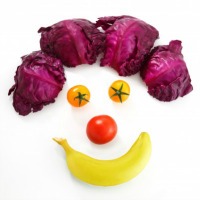
Let them make a mess in the kitchen!
Even though messy, involving kids is fun and teaches skills, and not just for baking.
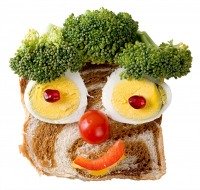
- Even young kids can help arrange salads, e.g. and make faces, or help add things to make a soup.
Help them decide which soup or stew you should make.
Help them find the ingredients or go shopping with them. This way they will learn that soup does not always come from a can
Kids Eating Healthy Tip: Teach by example and Ban Junk Food

Why no junk food for healthy kids?
A junk food “addiction” will eventually make their life miserable with heart disease, cancer, diabetes, and so on.
- Teach by your own enthusiasm for real foods.
Junk food means processed foods such as white flour, and all hydrogenated oils in margarine, shortening, snack crackers and peanut butter.
- Instead, on outings, take kids to a market and explore new fruits and vegetables – buy a pomegranate, or a whole pineapple, some peas in the pod, an avocado or any fresh fruit in season.
Don’t make a pie unless you have too much fruit.
Instead, teach them that fresh and whole is best for them.
Make whipping cream (the real thing) to go with the fruit if you want to make it special. Yummy and fun!
Kids Eating Healthy Tip: “Pay” with Sweet, Salt-Savory, and Bitter
Introduce distinctions such as sweet, savory (salty) and bitter and texture.
- Be playful with introducing new tastes and smells and ask for feedback on textures and subtleties rather than simply “do you like this” or “not like this.”
Bitter has virtually disappeared from modern eating, but some greens may come close.
- Ask them to tell you how bitter it is, rather than “bitter, yuk,” so they find out it is OK to experience bitter.
Find words to describe texture, such as smooth, gritty, crunchy, slimy, etc
Send us your healthy recipes for kids:
We hope that you have been inspired for new healthy meal ideas for kids to try.
- Having healthy kids is worth the effort in the long run!
For more healthy recipes for kids, see:
10 tips and secrets for getting kids eating healthy meal ideas for kids -- healthy recipes for kids
GO TO Health Discoveries HOME PAGE from Kids Eating Healthy


Recent Articles


-
Natural Blood Pressure Supplement Backed by Science
Apr 13, 24 04:10 PM
Try a natural blood pressure supplement for lowering blood pressure without life long medications. -
Scientists find a Natural Treatment for Parkinsons Disease
Apr 04, 22 10:18 PM
A new treatment for Parkinsons disease? Parkinson's disease is a neuro-degenerative disorder for which no neuro-restorative therapeutic treatment is currently available. The medications typically used… -
Amazon’s Best Beauty Products?
Mar 25, 22 12:00 AM
Finding which beauty product is best for your health has just become easier. Did you know that in 2022 Amazon created the Amazon AWARE line of beauty products that are EWG VERIFIED? This stamp of appr…