What's normal heart rate variability?
Why is our heart rate variability important? How does it differ from the "out of control" racing heart of AFIB irregularities - atrial fibrillation?
- Heart rate variability, or HRV, refers to the slight beat-to-beat changes of a normal heart rhythm.
The amount of variability that our heart beat has, moment to moment, is in fact a key indicator of our physical health, our emotional balance and overall wellbeing!
What is the problem when with a LOW HRV?
- When we have low variability, or HRV levels, this is usually a sign of aging and health problems such as a higher BMI, obesity, as well as negative emotional states and chronic stress.
Measuring heart rate variability:
- The emWave technology by the Heart Math Institute is based on 30 years of research.
- Download it to your phone -- it is easy to learn and use -- even though it is a sophisticated, advanced heart-rate rhythm monitor.
How to improve heart rate variability?
- The emWave displays the heart’s rhythm which reflects your emotional state and helps you learn how to shift into an optimal state.
--------------------------------
How is atrial fibrillation different from heart rate variability?
During atrial fibrillation, the heart's two upper chambers (the atria) are beating chaotically and irregularly.
The AFIB heart is in distress or "out of sync" -- out of coordination with the two lower chambers or ventricles.
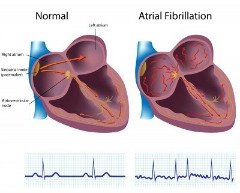
- Symptoms of Atrial fibrillation often include heart palpitations, shortness of breath and weakness with a background of emotional distress.
Medically, the concern with atrial fibrillation is the risk of blood clots within the upper chambers of the heart. These blood clots could circulate and lead to blocked blood flow and cause a stroke.
- There are medical interventions to improve the heart's electrical system and signaling. Taking magnesium supplements would be the best place to start. Why?
- Magnesium is an electrolyte and can often help restore balance to the signals of the heart.
- Regaining inner balance with heart rate variability monitor can both reduce the heart's chaos and improve heart rate variability!
Techniques for Heart Rate Variability Training
Instead of a healthy, subtle variability in each beat of the heart, AFIB patients experience a heart that is "out of control, " and this can be frightening.
AFIB patients tend to suffer from psychological distress. They often find it difficult to cope with atrial fibrillation because of an emotional situation.
- Fortunately, the heart can be brought back into coherence with cognitive therapy, meditation and breathing techniques.
Here's a scientifically proven, easy to use APP that can help!

------------------------------------
Measuring Heart Rate Variability
How to quickly get your heart in sync ?
The HEART MATH Quick COHERENCE Technique can help improve your heart and mind COHERENCE. This coherence is essential for physical and mental wellbeing.
- With an APP downloaded to your phone, this technique allows, you to achieve what's normal heart rate variability -- but it also provides heart rate variability training.
- This enhances athletic performance, as well as physical and emotional resilience.
With 30 years of research, the Hear Math Institute has a scientifically proven APP to help you improve heart rate variability!
-------------------------------------
See: HEART MATH's Quick Coherence Technique
-------------------------------------
Is Atrial Fibrillation Linked to Diet?
What about heart rate variability and nutrition?
Here's how the foods you eat are related to AFIB, or heart irregularities.
If your doctor wants you on meds to prevent blood clots - blood clots in lungs, a leg blood clot or a blood clot in the heart, please read on. Why?
Fortunately there are effective natural AFIB treatments. These can solve an irregular heart beat problem -- so that you can avoid the side effects of blood thinners.
Can the foods we eat really disrupt the rhythms of your heart to cause heart arrhythmia?
Yes. Researchers found that heart irregularities such as AFIB are related to these two factors:
- Eating "bad" trans fats
- Japanese researchers actually found that you are more likely to get a stroke if your cholesterol levels are LOW!
AFIB, they say, is related to:
- Eating "bad" or hydrogenated trans fats, and, here is a big surprise...
- Your risk of a stroke will INCREASE the LOWER your levels of cholesterol are!
You may have to see this to believe it! This was a surprise finding by Japanese researchers!
"It's like a double whammy," explains Peter Light, a researcher at the Mazankowski Alberta Heart Institute, the lead author of a study on the causes of heart failure.
"Bad" Trans Fats but NOT high Cholesterol?
Although it has been known that “bad” trans fats (NOT animal or "saturated" fats) will clog arteries, it is only just coming to light that:
- Foods rich in trans fats and hydrogenated oils can also interrupt the electricity of the heart itself, causing arrhythmia.
"These bad fats don't just clog your arteries, they are stored in your heart cells, and that can affect how the heart beats. This can really worsen the condition of a patient suffering a heart attack."
- The trans and hydrogenated fats stored in the cells of the heart, “can actually cause sudden cardiac death through arrhythmias during a heart attack” Why?
- A heart attack will be more damaging because of the cellular changes made by the "BAD TRANS FATS" in processed foods -- cookies, fries, baked goods, cereals etc!
You may want to revise your diet BEFORE resorting to blood thinner medication against blood clots for the rest of your life!
- Natural heart supplements can also help normalize your heart rhythm naturally.
This way your doctor may not have to put you on meds as treatment for irregular heart beat-- for the rest of your life!!!
Abnormal Heart Rhythms & "Bad" Fat Buildup
Publishing his research in the European Molecular Biology Organization Journal, pharmacologist Peter Light has found a new, compelling reason to avoid harmful trans fats.
His research explains this new linking of heart variability and nutrition as follows:
- Our heart uses fat as an energy source to beat more than 100,000 times a day. But if bad fats are stored in the heart this causes an excessive build up of calcium in the cells of the heart.
In normal hearts, calcium is pumped in and out of the heart each second with each wave of electricity.
- But in a heart filled with too much trans and harmful fats, there is a build up of calcium, and these abnormally high calcium levels disrupt the heart’s electrical flow and can cause arrhythmia -- abnormal rhythms –- as well as hyper contractions, where electrical signals are firing when they shouldn’t be.
In particular, bad fats interfere with a protein called the sodium-calcium exchanger. "Its role is to pump calcium out," Dr. Light said. "But during a heart attack, it pumps calcium in."
- The more calcium builds up in the heart, the worse the heart attack and the harder it will be for the patient to recover, according to the research.
This new linking of heart rhythm problems and fats, according to Dr. Light, will hopefully encourages the public to avoid foods rich in trans fats and hydrogenated oils:
• COOKIES
• BAKED GOODS
• DONUTS
• FRIES
• PROCESSED FOODS

Instead, it is recommended to use monounsaturated fats of olive oil, avocados and omega rich oils in fish and nuts that are BENEFICIAL for heart health.
- GOOD FATS such as fish oils, nuts, avocados and olive oil do not have the same bad effect on the heart’s electrical rhythms.
So if you want a natural AFIB treatment and avoid taking medications, this new heart rhythm and nutrition connection should be good news!
Safe Supplement for Heart Irregularities

Dr. Harry's formula can help if:
You are worried about a blood clot in the heart, a leg blood clot or blood clots in lungs.
If you would like help immediately, and NATURALLY, to avoid a stroke due to a blood clot...
Consider trying Dr. Harry's blood clot formula, which is SAFE to take with your medications.
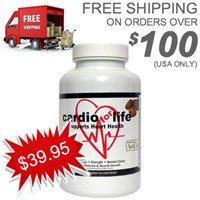
Dr Harry's ENHANCED arginine formula can help improve AFIB, circulation, high blood pressure, high cholesterol and lower blood clot risk.
- See Articles & VIDEOS on how to reverse blood clots and AFIB naturally, by Dr. Harry Elwardt.
----------------------------------
Ask Us About Natural AFIB Treatments:
You may ASK US about:
- Proven NATURAL agents that prevent blood clots by improving circulation, while lowering blood pressure and clearing the arteries.
- Ask us about supplements that are SAFE to take along with warfarin, or how to safely go off warfarin with your doctors approval:
LOW Cholesterol Linked to AFIB?
You may have to rub your eyes, because this may be hard to believe!
Japanese researchers found a link between LOW cholesterol levels and a heart rhythm disturbance known as atrial fibrillation, or AFIB.
- In Japan, cardioembolic strokes are quite common. (blood clot in the heart)
- These are caused by small blood clots that form in the heart, and they then travel to the vessels in the brain causing blockages.
The relevance of the Japanese research is:
- atrial fibrillation, or AFIB is a risk factor for an cardioembolic stroke, due to a blood clot in the heart.
- bleeding strokes were 96% LOWER for people who had the HIGHEST CHOLESTEROL levels!
LOW Cholesterol = MORE Risk of Stroke!!
Yes, you read that right!
Japanese researchers have found a relationship between LOW cholesterol and INCREASED risk of stroke.
Dr. Hisako Tsuki of Kansai Medical University, in Japan, studied more than 16,500 people for ten years. He measured their cholesterol levels and compared that with whether or not they got a stroke.
- The amazing results were that the HIGHER the cholesterol, the LOWER the risk of stroke.
- This held true for getting 2 different types of strokes:
Ischaemic STROKES are caused by blockages in the arteries and:
- blood clot in the heart
- leg blood clot
- blood clot on lung
- blood clots in brain
People with the HIGHEST
cholesterol levels, had 71% fewer strokes due to blood clots as compared to those who had the LOWEST cholesterol.
For bleeding strokes (haemorrhagic strokes) the differences were even more amazing -- 96% LESS for people with the HIGHEST cholesterol levels as compared to those with the LOWEST levels!
Source: "Low serum cholesterol level and increased ischemic stroke mortality" published in the Archives of Internal Medicine, 2011 Jun 27.
Stroke Risk LOWER with HIGH Cholesterol?
Still worried about having high cholesterol? You may have to rub your eyes and review your medications!
Dr. Hisako Tsuki had split cholesterol levels into 4 groups:
- With the LOWEST being less than 4.1 mmol/L and the HIGHEST being greater than 6.2 mmol/L.
Taking all forms of stroke together, risk of death in the HIGHEST cholesterol levels was 77% LOWER than in the LOWEST cholesterol levels.
But we know that cardiovascular disease includes heart disease too.
So perhaps increased cholesterol levels increased the risk of heart disease deaths, so that these "balanced out" deaths from a stroke?
- Actually, risk of death from HEART DISEASE in the HIGHEST group of cholesterol group was NOT ANY HIGHER, statistically speaking.
It was actually LOWER, but it was NOT statistically significant.
- The results showed that the HIGHER someone's cholesterol was, the LOWER their risk of death due to cardiovascular disease.
Overall, in those with the highest cholesterol, risk of death was 58% lower than those in the lowest cholesterol group.

The Bad News about "Bad" Fats
While the research on heart rhythm irregularities and nutrition of fats was done in a lab, at a molecular level, it has some potential practical implications.
For example, Dr. Light said, patients scheduled for heart surgery could be advised to cut out all trans fats for a few weeks before the operation as a way of reducing the risk of a poor outcome.
Dr. Light said this troubling effect on the sodium-calcium exchanger was not seen with mono unsaturated fats such as olive oil.
- AVOID BAD FATS: Those that are solid or semi-solid, such as margarine and partially hydrogenated oils, are BAD FATS.
He said the research also has implications for the impact of trans fats on diabetes and hypertension, because similar mechanisms are at work.
- TRANS FATS -- the artificial partly hydrogenated oils made to give food a creamy texture and increase its shelf life.
IT TAKES SPECIAL EFFORT TO AVOID TRANS FATS:
- Virtually every fast-food or family restaurant French fry is cooked in trans fat-filled grease.
Almost half of all CEREALS, both cold and hot, contain it, according to the Food and Drug Administration, the FDA.
So do 70 percent of cake mixes, 75 percent of CHIPS and other salty SNACKS, 80 percent of frozen breakfast foods like WAFFLES, and 95 percent of COOKIES.
- Even products people buy when they want to eat healthier -- granola, POWER BARS and low-fat COOKIES and CRACKERS -- are often made with partially HYDROGENATED vegetable oil.
During a recent informal survey of 140 varieties of CRACKERS on a typical supermarket shelf, only three brands had no partially HYDROGENATED oil.
Best to avoid packaged/processed foods now that you know how heart and nutrition are linked!
Find foods that truly make your heart sing! Your step may become lighter and you will automatically improve heart rate variability.

- Avoid the foods that typically have TRANS FATS -- baked goods such as CAKES, TARTS, COOKIES, DONUTS, FRIES, and a wide variety of PROCESSED foods.
- Watch carefully, because this “PHANTOM FAT” can be well hidden in your cereal bowl.
It's the bad boy in your bag of MICROWAVE POPCORN.
It lurks in those “low-fat COOKIES” and even in ENERGY BARS.
Heart rate variability improves with a happy heart and emotional resilience!
Ask Us about: Supplements for AFIB
Want immediate protection against AFIB?
You may ASK US about:
- Supplements to improve circulation and dissolve existing small blood clots.
- Supplements to SAFELY take with warfarin to help prevent dangerous bleeding. Your doctor can then reduce your need for Coumadin based on improved test results.
What's Normal Heart Rate Variability got to do with AFIB and Salt?

Minerals play a big part in how to stop AFIB naturally!
Avoiding salt may not be the answer. Again, you may need to rub your eyes!
- Why eat Your BANANAS for POTASSIUM and NUTS for MAGNESIUM?
Heart irregularities and nutrition have been linked for a long time – we all know to lower our salt intake for heart problems, but there is more to it...
- Arrhythmias are due to SALT intake in the absence of adequate POTASSIUM.
It is not so much the salt intake as the proper SODIUM/POTASSIUM ratio in the blood:
Electrolyte imbalances in the blood are caused by our typically eating too much sodium – salt, with NOT ENOUGH POTASSIUM to balance the electrolytes needed.
Good potassium sources are BANANAS, ORANGE JUICE, POTATOES, ALMONDS, AND WHOLE MILK.
- Many people have a potassium/sodium imbalance due to not enough potassium, and this imbalance that is linked to AFIB, arrhythmia and heart disease.
And of course, magnesium is also a mineral crucial for heart function, so eat almonds, almonds, almonds!
Stop AFIB naturally with MINERALS:
You'll want to rule out mineral deficiencies such as magnesium!
- Heart formulas like Dr. Harry's, has the needed minerals like magnesium that you need for a healthy heart.
Cardiovascular disease, high cholesterol, high blood pressure, migraines, and hyperactivity in children are often related to an imbalance of minerals, as well as an excess toxins in the body.
How to Stop AFIB Naturally
We hope that you have been inspired by our posting about how AFIB and what's normal heart rate variability are different! Also, how the heart and nutrition -- are linked.
(Arrhythmia, Heart Arrhythmia, Hyper- Contractions, and Abnormal Rhythms -- atrial fibrillation).
Hopefully you will remember research that connects cholesterol and trans fats to heart irregularities when you want your next donut!
- “Bad” fats are among the causes of coronary heart disease because they cause arrhythmias during a heart attack.
- Yes, it is certainly a surprise that LOW cholesterol -- not high cholesterol is what causes a stroke!
- Know your fats and minerals to avoid mini stroke symptoms.
You can SAFELY add out recommended natural heart supplements and foods to your blood clot treatment:
- a leg blood clot
- a blood clot in the heart
- blood clot on lung
We hope that our site has helped you discover what's normal heart rate variability. Hopefully also to be able to solve afib naturally!
Diet changes, SAFE natural heart supplements and heart rate variability training can all get you back on the FAST track!
- Hopefully you are reassured about avoiding blood clots now that you know how to get your heart and mind back in balance!
- A heart rate variability monitor backed by science can get you started with the assurance of tested results!
-------------------------------------
------------------------------------


Recent Articles


-
Natural Blood Pressure Supplement Backed by Science
Apr 13, 24 04:10 PM
Try a natural blood pressure supplement for lowering blood pressure without life long medications. -
Scientists find a Natural Treatment for Parkinsons Disease
Apr 04, 22 10:18 PM
A new treatment for Parkinsons disease? Parkinson's disease is a neuro-degenerative disorder for which no neuro-restorative therapeutic treatment is currently available. The medications typically used… -
Amazon’s Best Beauty Products?
Mar 25, 22 12:00 AM
Finding which beauty product is best for your health has just become easier. Did you know that in 2022 Amazon created the Amazon AWARE line of beauty products that are EWG VERIFIED? This stamp of appr…