Best Brain Anti Aging Brain Booster Supplements & Healthy Brain Games

Are there brain booster supplements, diets or games that work?
- How to prevent or slow down Alzheimers, Parkinsons and even Lou Gehrig's Disease, or ALS?
Here's the good news! Only in the last decade have scientists reported that we can actually generate new brain cells and the connections between them!
Here's what researchers are saying about brain anti aging:
- The good news is that mental stimulation, and diet and exercise against dementia, including vascular dementia, can keep a normal brain spry.
Exercise and fitness applies to our heart AND to our head -- the more you challenge them the more new nerve pathways you form in your grey matter.
The Mediterranean diet is not only being recommended for the heart but for your head's best health -- against vascular dementia AND Alzheimer's Disease.
You have "CELL TOWERS" that Send Messages!
Scientists from Duke University Medical Center in North Carolina are talking about building and preserving “cell towers” in our grey matter that can send messages:
“the more cell towers you have, the fewer missed calls” according to Dr. Murali Draiswamy, who is the head of neurological psychiatry there, and has written the book "The Alzheimers Action Plan." 1
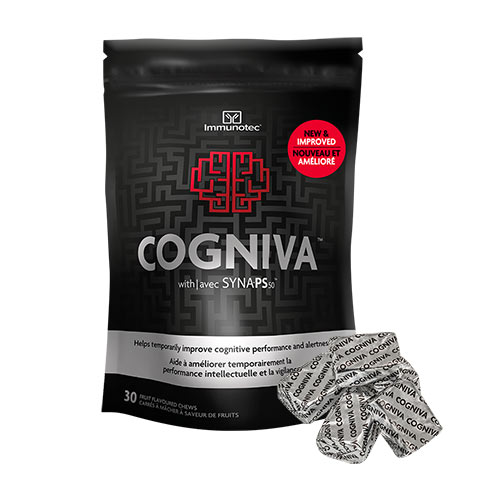
What's Best Against Memory Loss?

Researchers say that you can give your grey matter a good workout with just a few modifications to your daily life:
- You can do “neurobics” by changing the way you do daily things, thereby engaging different parts of the brain's functions.
For instance, you can brush your teeth, key in your phone or do text messages with the “other” hand.
- “Our brains love novelty,” says Dr. Doraiswamy, “and new things do not need to be complicated,” so that becoming more aware of your surroundings and sensing and doing things differently can help.
For instance, by eating without talking or simply with your eyes closed, you change your sensory input.
- Learning a language or a musical instrument provides great stimulation, as do games such as chess and bridge which require socializing and strategy.
Vitamins for Brain Health:
Does Fast Food Make You Stupid?

Unfortunately, eating too much junk food such as cookies and baked goods, and fast foods such as fries, that have trans fats, turns out to be one of the causes of dementia.
How can that happen?
- Researchers followed people for over 20 years, and found that those who had eaten more artery damaging fats also got the type of BRAIN SHRINKAGE associated with Alzheimers disease.
People who ate better food and got better nutrition, on the other hand, had less or no shrinkage of their grey matter.
- Those with diets high in vitamins D, C and E, as well as the the B vitamins had LESS brain SHRINKAGE as they got older.
Dr. Gene Bowman, of the Oregon Brain Study, said the purpose of the study of 104 people over the age of 65, was to find out the effects of age on the risk for dementia in healthy people, or those without known risk factors such as smoking and diabetes.
What Stops Your Brain from Shrinking?
Can eating fast foods cause damage and be one of the causes of dementia?
Yes, says Dr. Gene Bowman, who conducted the "Brain Aging" study.
- He found that those whose grey matter did NOT shrink as they aged, had eaten MORE protective foods in their diet.
Not only were their diets higher in vitamins, such as vitamin B, C and E and D, they also ate MORE OMEGA 3 FATTY ACIDS.
HOW ARE OMEGAS PROTECTIVE?
Dr. Bowman explained that THINKING abilities are related to the SMALL BLOOD VESSELS, and Omega 3's seem to benefit the small blood vessels that nourish our grey matter.
Great reason to eat fish, healthy foods and Omega 3 brain booster supplements!
Brain Booster Supplements for Neurological Diseases
Brain anti aging has come a long way! Please explore our postings:
Scientists now know a lot about the causes of NEURO-DEGENERATION. This is helping many people to slow down, and even reversing neurological diseases, including help with Lou Gehrig's Disease, or ALS.
Alzheimer's Disease:
Parkinson's Disease:
Parkinsons Stages
Ask Us for YOUR Best Brain
Booster Supplements

You may ASK US for a personal recommendation for:
- Best brain booster supplement for repairing small blood vessels that nourish the brain
- Best protein brain booster supplement that has been shown to be NEURO-PROTECTIVE by protecting the neurons -- nerve cells from DISEASE and from aging.
- Recommendation for Brain Booster Supplements that cross the blood brain barrier.
Higher Cholesterol to Improve Memory?
Surprise! Researchers say that memory loss is LESS in people with HIGHER cholesterol levels!
If you are getting to be towards the age of 50, you may want to know if you have high cholesterol – the good HDL kind -- and make sure you keep it high. Why?
- British scientists have found that higher "good" HDL (high-density lipoprotein) cholesterol is associated with LESS memory loss in people aged 55 and 60.
And by the age of 60, people with LOW HDL cholesterol had a 53-per cent HIGHER risk of memory loss over those with HIGH HDL levels of cholesterol.
- In the study, total levels of cholesterol and triglycerides – another type of fat found in the blood – had NO association with memory decline or memory loss.
The British study involved about 3,700 men and women of middle age to determine what foreshadows Alzheimers disease and other forms of dementia.
- They found a key factor to be LOW HDL cholesterol.
With lower levels of HDL, researchers found declining memory by age 60, and such memory loss often precedes the development of dementia such as Alzheimers in the elderly.
- Scientists fear that with an aging population, we are facing a dementia time-bomb.
(Dr. Singh-Manoux, of the French National Institute for Health and Medical Research and the University College London.)
Are Your Meds Making You Stupid?
Keep in mind that some widely used medications may block the action of acetylcholine, a chemical that is crucial to memory circuits.
These “anti-cholinergic” medications include:
- pain killers
- muscle relaxants
- older antidepressants e.g. Elavil
- some antihistamines
- anti-spasmodics
- incontinence drugs
Specialists like Dr. Doraiswamy warn that these negative effects on memory can “Cause a constant battle – the urologist puts you on a medication – and the memory doctor takes you off!”
- High cholesterol medications called statins can also have negative effects on memory.
Remember that cholesterol is a naturally occurring fat, and that the brain is made of 60% fat, and needs fats to function.
Higher cholesterol levels are protective of memory!
- Researchers found a link between naturally occurring high cholesterol and modestly better mental function in areas such as:
1) visual organization, 2) memory, 3) attention, and 4) concentration.
(The research team included Professor Penelope Elias and Merrill Elias, who studied data from the Framingham Heart Study)
You may want to consider natural alternative for lowering your blood pressure and high cholesterol if you are having memory problems.
“My 88–Year Old Father's Playing Bridge Again After Stopping Heart Meds!”

“Our family has recently witnessed the remarkable improvement in our 88-year-old father when an astute specialist in internal medicine pulled him off three of the medications he'd been prescribed by his family doctor (high blood pressure medication, cholesterol medication, and a prescription nasal spray).
In four days his blood sugar dropped from 25 to 7, his dizziness was gone, he stopped falling down at night, and his appetite was back.
After two weeks, his memory improved and he was back playing bridge again!
I have just read Dr. Dennis McCullough's book, "My Mother, Your Mother: Embracing 'Slow Medicine', the Compassionate Approach to Caring for Your Aging Loved Ones".
- It is interesting that Dr. McCullough's experience is that elders later in life do better on almost no medication.”
Submitted by N. MacMaster
- While diet, exercise and mental "neurobics" do lower the risk of
Alzheimers disease symptoms, vascular dementia and memory loss -- many can get extra benefit from proven brain
booster supplements that help to turn back the clock!
ASK US about Turning Back the Clock:
YOU MAY ASK US for:
- A recommendation for best brain booster supplements
Social Ties Improve Memory Most!

Strong social ties and contacts appear to protect against memory robbing dementia, according to a Harvard School of Public Health study involving 17,000 people over 6 years.
More important than age, income and health, was having an active social life, including being married.
- The most socially integrated had only HALF of the memory decline of the least socially integrated people over the age of 50.
Memory loss is a strong risk factor for Alzheimers disease and other form of dementia, but researchers are finding that being in the highest level of social integration, offset more than half of this age-related decline in memory.
(K. Ertel, American Journal of Public Health)
How Scientists say to Turn Back the Clock!
If you are healthy, it's never too late to start walking for a better memory and to ward off dementia.
We CAN stop memory loss brain booster supplements diet and exercise:
- Neurologists are showing us that we can UNDO the brain-shrinkage that happens as we get older, by starting an exercise program!
What kind of exercise is best? Both stretchers and walkers had MRI scans done before and after, and it was found that the walkers INCREASED the volume in the brain (the right and left hippocampus) by 2%, while stretchers DECREASED volume in the same part of theirs, by 1.4%.
Apparently, 1.4% is considered NORMAL SHRINKAGE!
By comparison, the walkers IMPROVED their MEMORY:
- Tests showed that the walkers also improved their memory in comparison to before, when they were inactive.
Lead researcher Kirk Erickson of the University of Pittsburgh says that this shows that we can REVERSE shrinkage, and that the walkers in effect had turned back the clock by 2 years.
It's NOT Your Genes! Exercise for Your Neurons

Exercise is very important!
Experts such as Norman Doidge, author of: "The Brain That Changes Itself" say that EXERCISE is the only activity that has been shown to increase the PRODUCTION and CONDUCTIVITY of NEURONS of brain-tissue.
- Neurons are the basic building blocks of or nervous system.
There is a lot of new research on the effect of exercise:
Studies show a protective effect of physical activity on cognitive function:
- A few studies on people older than 65 showed that exercising at least 15 to 30 minutes three times a week reduced the probability of developing Alzheimers disease symptoms, even in those who were genetically predisposed.
Aerobic exercise rather than weight training has the biggest impact on brain-function.
- Exercise improved memory, or cognitive function and decreased the incidence of dementia.
The protective benefits of exercise were seen to last up to several decades!
Studies show that even 30 minutes of brisk walking daily can improve blood flow to the head and boost:
- neural growth factors
- nerve cells' connectivity, which is considered to have an effect similar to that of “cross-training" for athletes.
ASK US for Brain Booster Supplements:
You may ASK US for a recommendation for YOUR needs:
- Brain booster "candy" chews for mental focus and improved memory
- Neuro-protective protein discovery for reversing symptoms of dementia: Alzheimers symptoms, Symptoms of Parkinsons Disease, ALS, Lou Gehrigs and Multiple Sclerosis, MS
- Dr. Harry's Heart Formula to improve circulation to the brain, and against Vascular Dementia and memory loss.
You CAN protect your grey matter with nutrition, exercise and brain booster supplements.
By knowing the causes of dementia, you do NOT need to get Alzheimers Disease symptoms even if genetically predisposed, say the scientists!
Sure, playing healthy brain games may work, but certainly certainly exercise regularly and find the best anti aging brain booster supplements for YOU!
-----------------------------------------------------------
SOURCES for Brain Booster Supplements Exercise and Foods:
1. Lifestyle and Neuro-cognition in Older Adults With Cardiovascular Risk Factors and Cognitive Impairment. Psychosom Med. 2017 Jul/Aug;79(6):719-727.
GO to Health Discoveries HOME PAGE from Brain Booster Supplements


Recent Articles


-
Natural Blood Pressure Supplement Backed by Science
Apr 13, 24 04:10 PM
Try a natural blood pressure supplement for lowering blood pressure without life long medications. -
Scientists find a Natural Treatment for Parkinsons Disease
Apr 04, 22 10:18 PM
A new treatment for Parkinsons disease? Parkinson's disease is a neuro-degenerative disorder for which no neuro-restorative therapeutic treatment is currently available. The medications typically used… -
Amazon’s Best Beauty Products?
Mar 25, 22 12:00 AM
Finding which beauty product is best for your health has just become easier. Did you know that in 2022 Amazon created the Amazon AWARE line of beauty products that are EWG VERIFIED? This stamp of appr…